Farthest-Point Sampling: Select Representative Structures
Farthest-point sampling (FPS) selects a representative subset from a large pool of similar candidate structures. It only considers descriptor distance, not whether a structure is physically reasonable. Clean structures with overlapping atoms or other defects before running FPS.
1. 打开描述符图
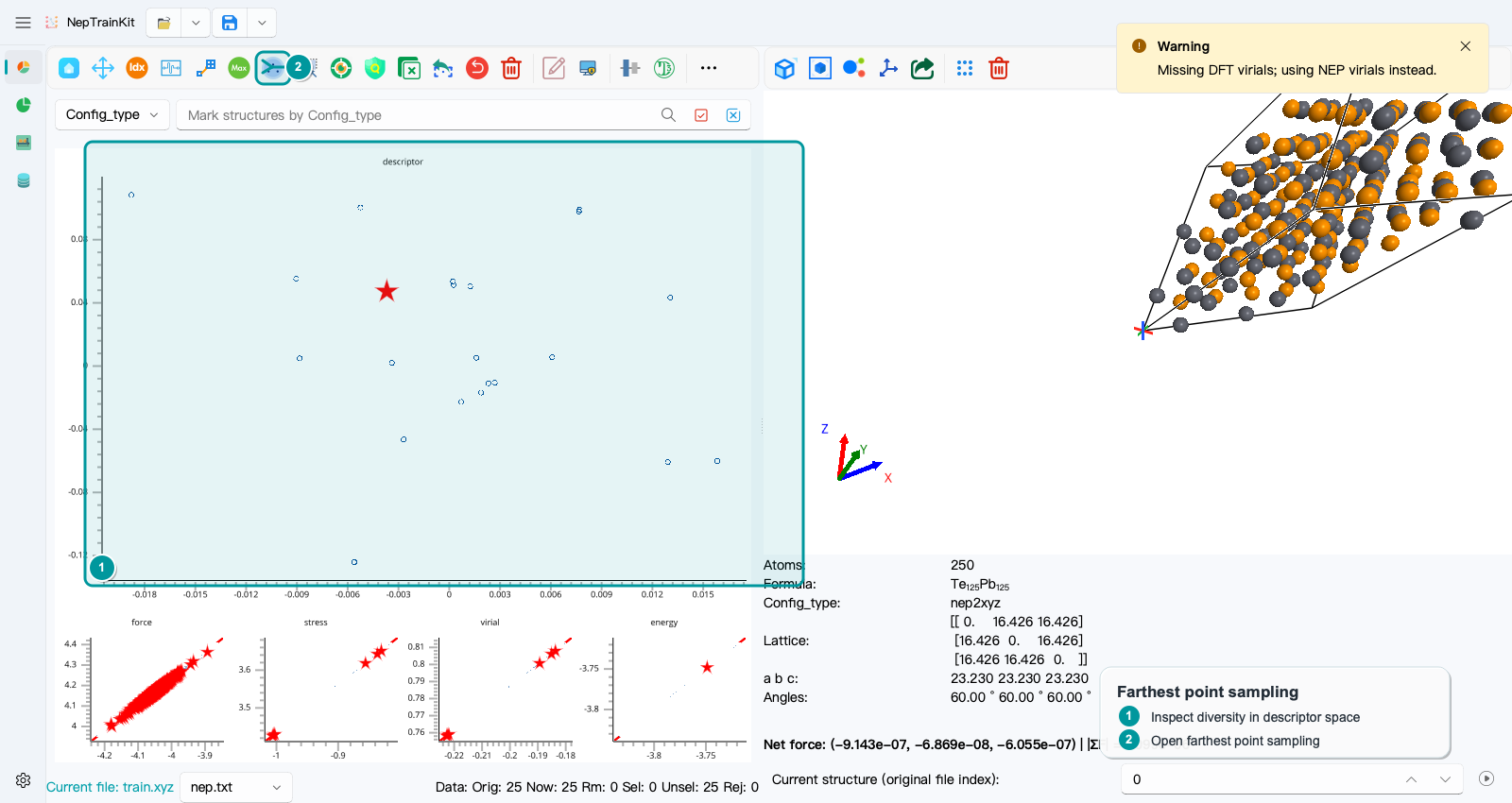
In NEP Dataset Display, open the cleaned candidate structures and a nep.txt that can calculate their descriptors. Double-click the descriptor thumbnail to move it into the main plot, then click Sparse samples.
2. 第一次这样设置
The following example selects 8 structures from a pool of 25 similar candidates:
Set
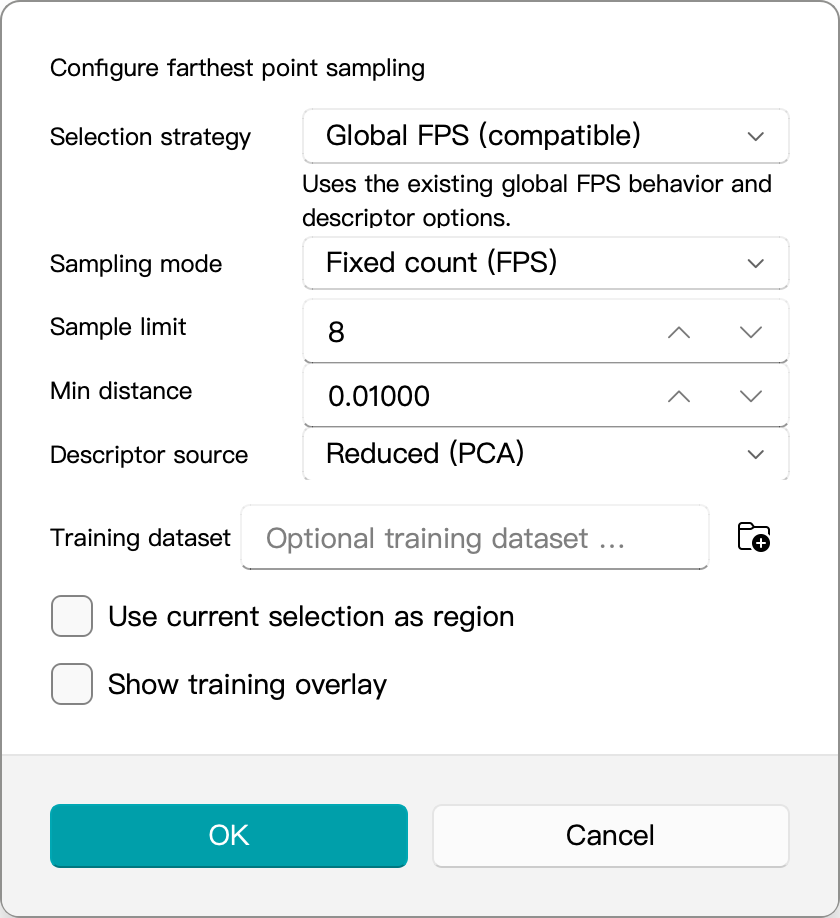
Selection strategytoGlobal FPS. This is suitable when all candidates have the same element set.Set
Sampling modetoFixed count (FPS), then enter the number of structures to retain inSample limit, such as8.Start with the current
Min distancedefault of0.01. Descriptor scales depend on the model. If fewer than 8 structures are selected, the distance threshold is too strict; reduce it and try again.Set
Descriptor sourcetoReduced (PCA)and leave the other advanced options empty for now.Click
OK.
If the candidate pool contains different element sets, use Element-set balanced FPS. It allocates a quota to each element set, so Sample limit must not be smaller than the number of element sets. Fill in Training dataset only when you want to avoid regions already covered by an existing training set. Leave it empty for a first pass over a single candidate pool.
3. 导出选中的代表结构
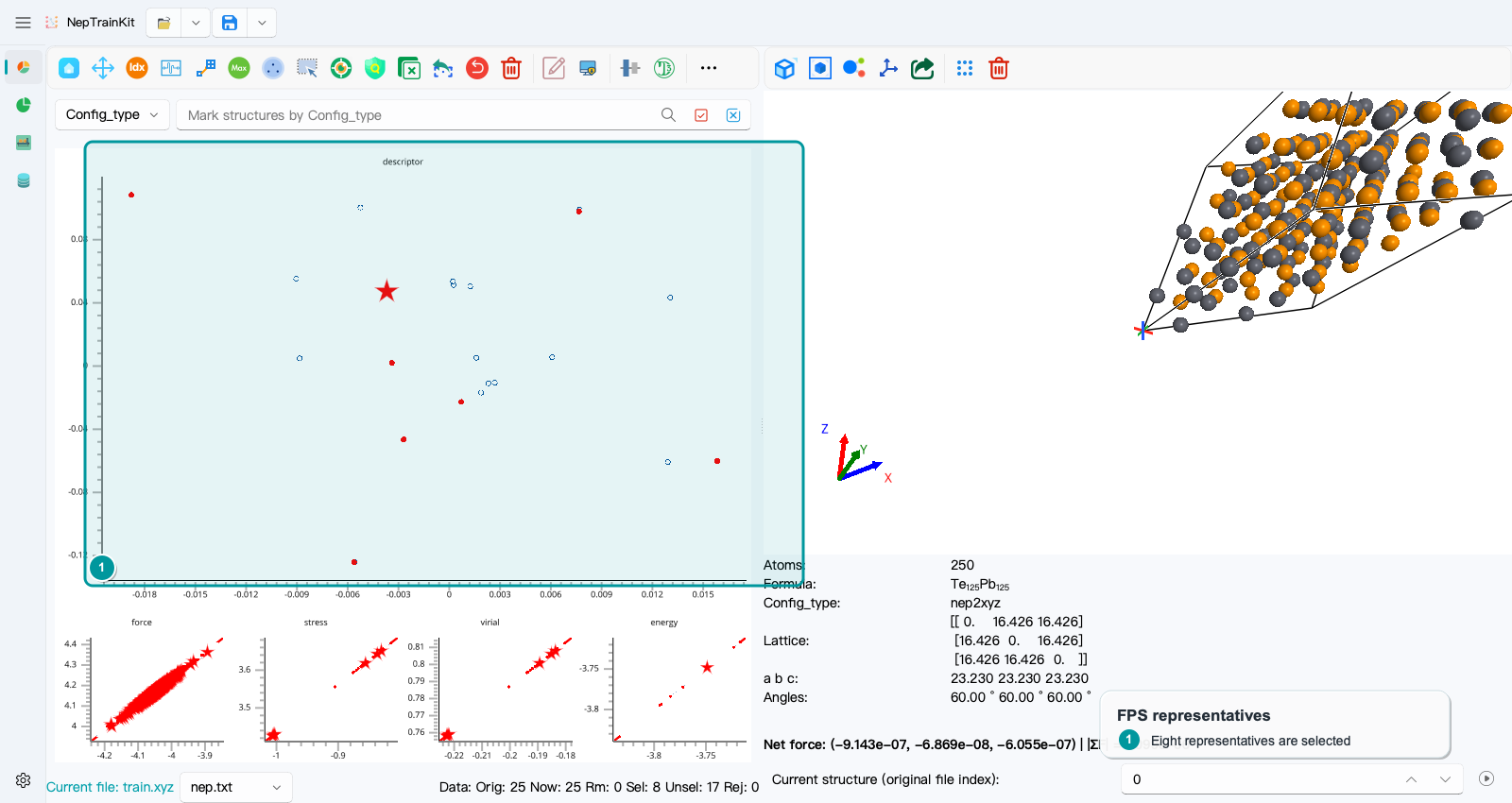
After the run, check the status bar. This example should show Sel: 8 and Unsel: 17. The red points are the selected representative structures.
After confirming the count, choose Export Selected from the Save menu. Do not click Delete selected items, because that would delete the representative structures you just selected.
Use current selection as region changes the meaning of the selection: the program samples only within the current selection and then deselects the representative points it keeps. This is useful when you intend to delete the remaining redundant structures in that region, but leave it unchecked for your first run.